Agile vs Waterfall: Which Is Right for You?
Quick Answer: Agile and Waterfall are project management methodologies with distinct approaches. Agile is iterative and flexible, while Waterfall is linear and sequential. Approximately 60% of the 2026 PMP exam uses agile or hybrid approaches, distributed across all three domains.
Agile vs Waterfall: Which Is Right for You?
⚠️ 2026 Exam Update: PMI updated the PMP exam in July 2026. The Business Environment domain now accounts for 26% of the exam (up from 8%). AI and sustainability are tested in scenario contexts. Live training eligibility changes on 1 December 2026 — only PMI Authorized Training Partner (ATP) courses will qualify. Always verify current requirements at PMI.org before applying.
What is Agile vs Waterfall
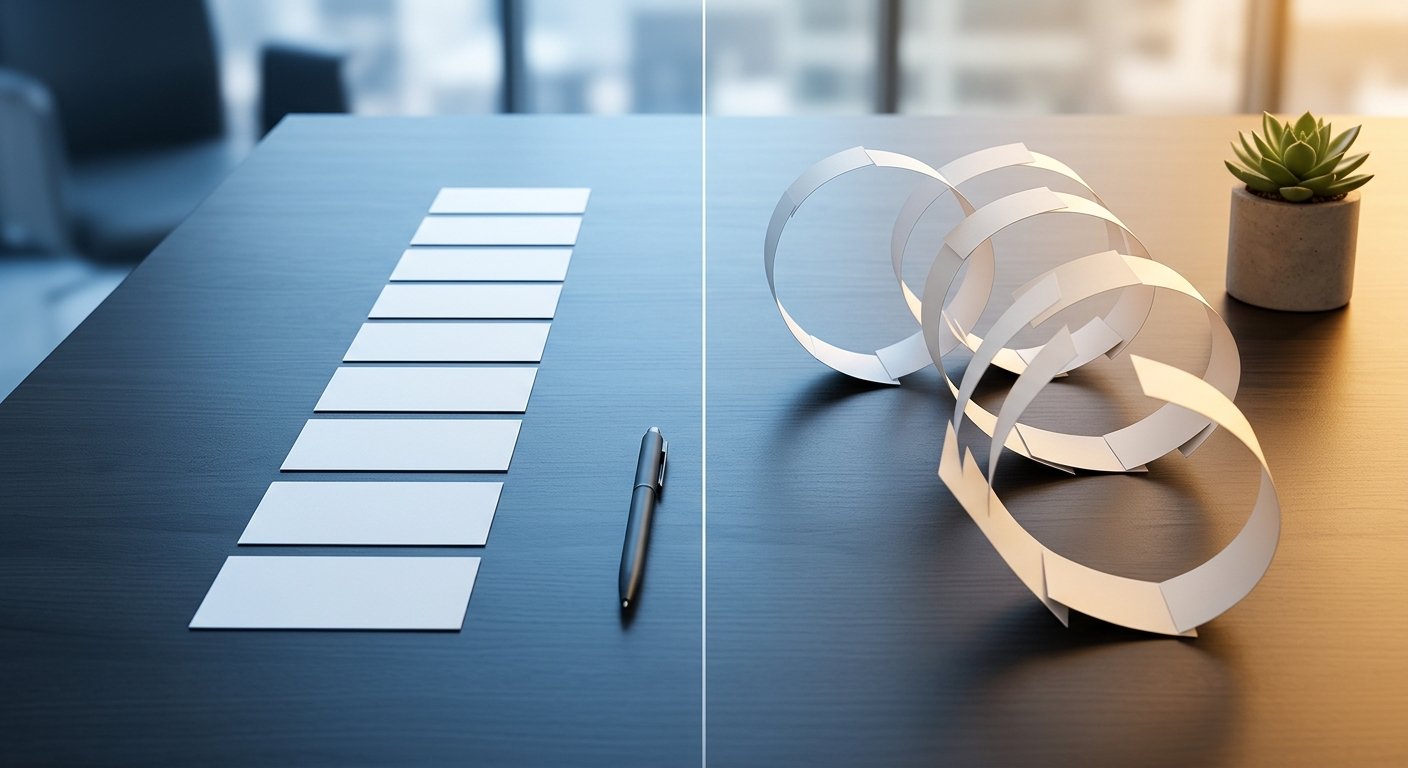
Agile and Waterfall are two distinct project management methodologies. Agile is iterative and flexible, focusing on delivering work in small increments. Waterfall is linear and sequential, with each phase completed before the next begins.
Core framework
Agile frameworks like Scrum and Kanban emphasize collaboration, customer feedback, and small, rapid releases. Waterfall follows a strict sequence: requirements, design, implementation, verification, and maintenance.
How Agile appears in the 2026 PMP exam
Approximately 60% of the 2026 PMP exam uses agile or hybrid approaches, distributed across all three domains. The Process domain (41% of the exam) carries the largest volume of agile-related questions.
When to choose pure Agile vs hybrid
Choose pure Agile for projects with unclear requirements and high change potential. Hybrid approaches work well when some phases benefit from Waterfall’s structure while others need Agile’s flexibility.
Common anti-patterns
Common Agile anti-patterns include skipping retrospectives, ignoring team velocity, and treating sprints as mini-Waterfalls. Waterfall anti-patterns include rigidly following the plan despite changing needs.
Metrics that matter
Agile teams track velocity, burn-down charts, and cycle time. Waterfall teams focus on phase completion percentages, critical path, and earned value management.
Related reading
What is Agile Methodology?Hybrid Project Management Guide2026 PMP Exam DomainsKey Takeaways
- Agile is iterative; Waterfall is sequential.
- ~60% of the 2026 PMP exam uses agile/hybrid approaches.
- Choose Agile for uncertain requirements, Waterfall for stable ones.
- Hybrid combines both approaches effectively.
Frequently Asked Questions
Q: What is the difference between Scrum and Kanban?
A: Scrum uses fixed-length sprints and prescribed roles/events, while Kanban is continuous with work-in-progress limits.
Q: When should I choose hybrid over pure agile?
A: Choose hybrid when parts of your project need Waterfall’s structure (like regulatory phases) while others benefit from Agile flexibility.
Q: How much of the 2026 PMP exam is agile or hybrid?
A: Approximately 60% of the 2026 PMP exam uses agile or hybrid approaches, distributed across all three domains.
Q: What are common agile anti-patterns?
A: Common anti-patterns include skipping retrospectives, ignoring team feedback, and treating sprints as mini-Waterfall phases.