Agile Principles: The Complete 2026 Guide for PMP Professionals
Quick Answer: Agile principles are a set of values and practices emphasizing flexibility, collaboration, and customer-centric delivery, now covering ~60% of the 2026 PMP exam across all domains.
What are agile principles?
The Agile Manifesto outlines four core values and twelve principles prioritizing individuals, working solutions, customer collaboration, and responsiveness to change over rigid processes and documentation.
Core framework
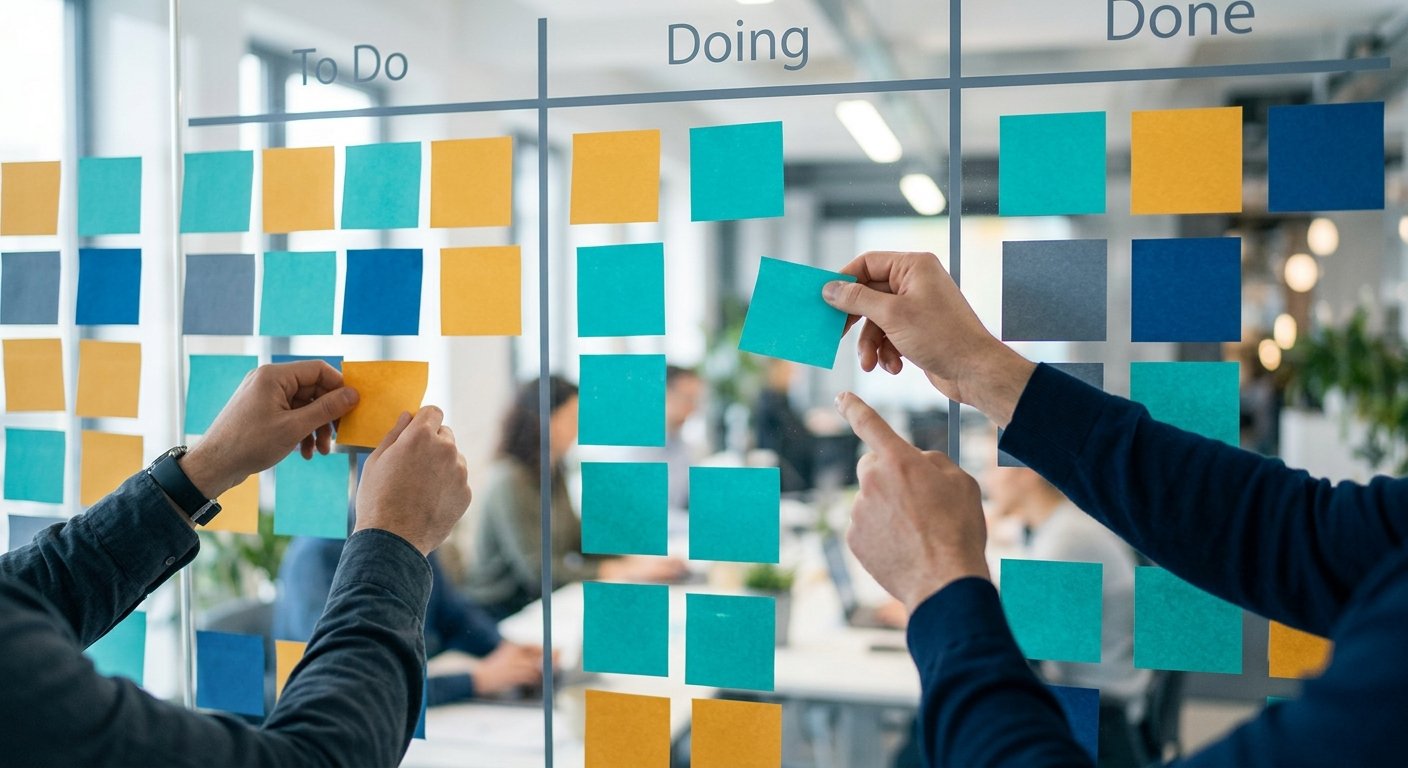
Scrum, Kanban, and XP implement agile principles through roles (Scrum Master, Product Owner), events (sprints, standups), and artifacts (product backlog, kanban board).
How Agile appears in the 2026 PMP exam
Approximately 60% of the 2026 PMP exam uses agile or hybrid approaches, distributed across all three domains. The Process domain (41% of the exam) carries the largest volume of agile-related questions.
When to choose pure Agile vs hybrid
Pure agile suits rapidly evolving requirements; hybrid blends agile flexibility with predictive structure for regulated industries or fixed-scope components.
Common anti-patterns
Waterfall in disguise (agile labels on predictive processes), sprint overload (unrealistic commitments), and cargo cult agile (rituals without purpose).
Metrics that matter
Cycle time, velocity trends, and escape defect rate reveal more than vanity metrics like story points completed.
Related reading
Scrum Master vs Project Manager
Hybrid Project Management Guide
2026 PMP Exam Changes
Key Takeaways
- Agile principles now influence ~60% of PMP exam questions across all domains.
- Scrum, Kanban, and XP implement principles through distinct roles and workflows.
- Hybrid approaches blend agile flexibility with predictive structure where needed.
- True agility requires adapting principles to context, not ritual compliance.
Frequently Asked Questions
Q: What is the difference between Scrum and Kanban?
A: Scrum uses fixed-length sprints with predefined scope, while Kanban focuses on continuous flow with work-in-progress limits.
Q: When should I choose hybrid over pure agile?
A: Hybrid suits projects with both stable and evolving components, or when regulatory requirements demand predictive documentation.
Q: How much of the 2026 PMP exam is agile or hybrid?
A: Approximately 60% of questions use agile or hybrid approaches, distributed across all domains.
Q: What are common agile anti-patterns?
A: Ritual mimicry without adaptation, ignoring technical debt, and using agile terms while enforcing waterfall controls.
Q: Which agile metrics actually improve outcomes?
A: Flow efficiency, customer lead time, and defect resolution rate drive improvement more than output-focused counts.
Q: Does the 2026 PMP exam test specific frameworks like SAFe?
A: The exam tests principles applicable across frameworks, not implementation details of any single methodology.