
Agile Approach: The Complete 2026 Guide for PMP Professionals
Quick Answer: The agile approach is an iterative project management methodology that emphasizes flexibility, collaboration, and customer feedback. In the 2026 PMP exam, approximately 60% of questions use agile or hybrid approaches across all domains.
What is the Agile Approach?
The agile approach is an iterative project management methodology that emphasizes flexibility, customer collaboration, and responding to change over rigid planning. Per the PMBOK Guide 7th Edition, agile focuses on delivering value through incremental delivery and continuous improvement.
Core Agile Frameworks
Scrum: Uses roles (Scrum Master, Product Owner), events (Sprint, Daily Standup), and artifacts (Product Backlog, Sprint Backlog).
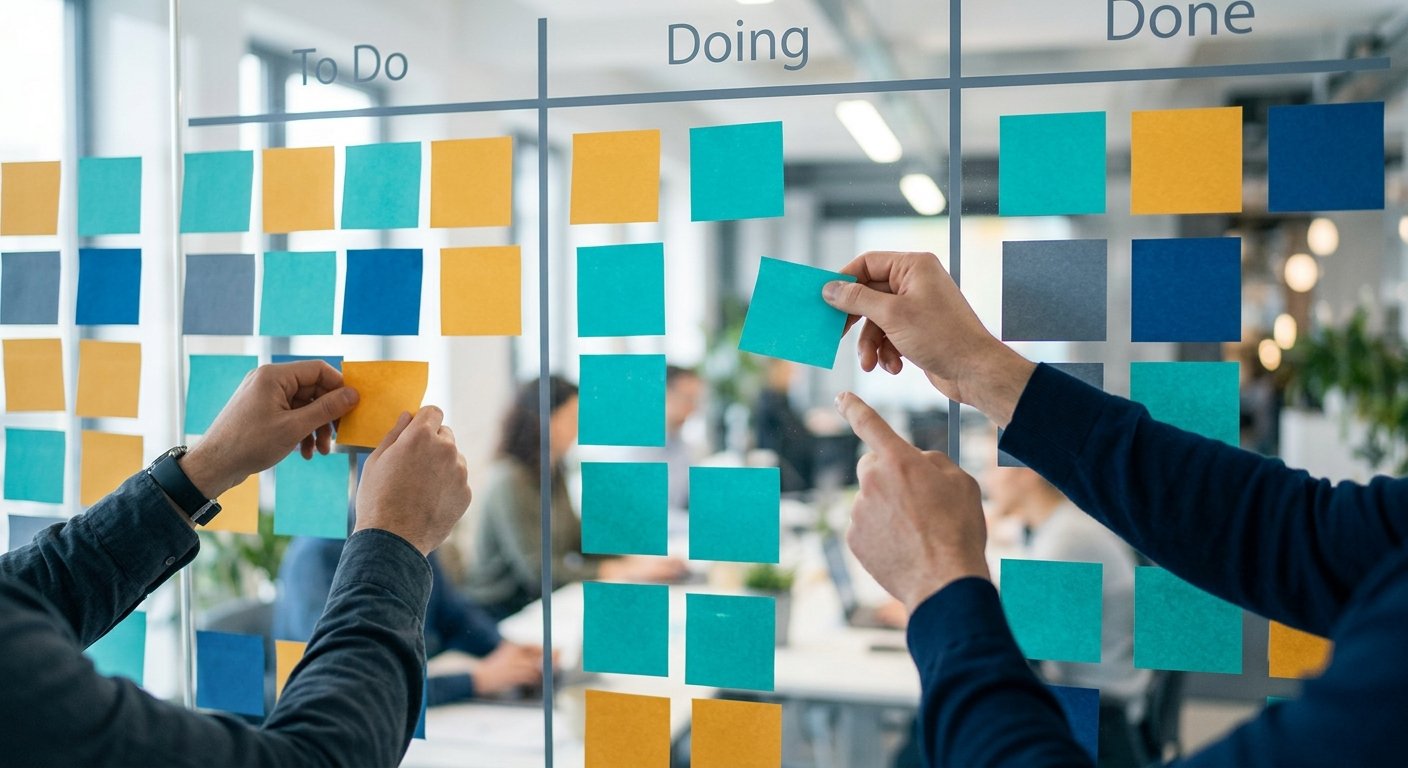
Kanban: Visual workflow management with work-in-progress limits and continuous delivery.
XP (Extreme Programming): Technical practices like pair programming and test-driven development.
Agile in the 2026 PMP Exam
Approximately 60% of the 2026 PMP exam uses agile or hybrid approaches, distributed across all three domains (People 33%, Process 41%, Business Environment 26%). This reflects PMI’s 2026 Examination Content Outline update.
When to Choose Pure Agile vs Hybrid
Pure Agile: Best for projects with high uncertainty, rapidly changing requirements, and empowered teams (e.g., software development).
Hybrid: Combines agile with predictive elements for regulated industries or projects with fixed compliance requirements (e.g., construction, healthcare).
Common Agile Anti-Patterns
- Sprint scope creep without adjusting duration
- Daily standups turning into status meetings
- Ignoring technical debt under delivery pressure
Metrics That Matter
Cycle Time: From work start to completion
Velocity: Average work completed per sprint
Escaped Defects: Issues reaching customers
Related Reading
2026 PMP Certification Overview
Key Takeaways
- The agile approach emphasizes iterative delivery and customer collaboration.
- Approximately 60% of the 2026 PMP exam uses agile or hybrid approaches.
- Scrum, Kanban, and XP are core agile frameworks with distinct practices.
- Hybrid methods combine agile with predictive elements for complex projects.
Frequently Asked Questions
Q: What is the difference between Scrum and Kanban?
A: Scrum uses fixed-length iterations (sprints) with defined roles and ceremonies, while Kanban focuses on continuous flow with visual workflow management and work-in-progress limits.
Q: When should I choose hybrid over pure agile?
A: Hybrid approaches work best when projects have both agile-friendly elements (changing requirements) and predictive needs (fixed regulatory deliverables or strict budget controls).
Q: How much of the 2026 PMP exam is agile or hybrid?
A: Approximately 60% of the 2026 PMP exam uses agile or hybrid approaches, distributed across all three domains (People, Process, Business Environment).
Q: What are common agile anti-patterns?
A: Common anti-patterns include treating sprints as mini-waterfalls, neglecting retrospectives, allowing technical debt to accumulate, and focusing solely on velocity over value delivery.