Agile Certification: The Complete 2026 Guide for Project Professionals
Quick Answer: Agile certification validates expertise in iterative project delivery methods. The 2026 PMP exam weights ~60% of questions across all domains to agile/hybrid approaches, making certification valuable for project professionals.
What is Agile Certification?
Agile certification formally validates a professional’s expertise in iterative project delivery frameworks like Scrum, Kanban, and XP. Unlike the PMP’s broad project management focus, agile certifications target specific methodology mastery. Per PMI.org as of October 2026, approximately 60% of the PMP exam uses agile or hybrid approaches distributed across all three domains.
Core Agile Frameworks
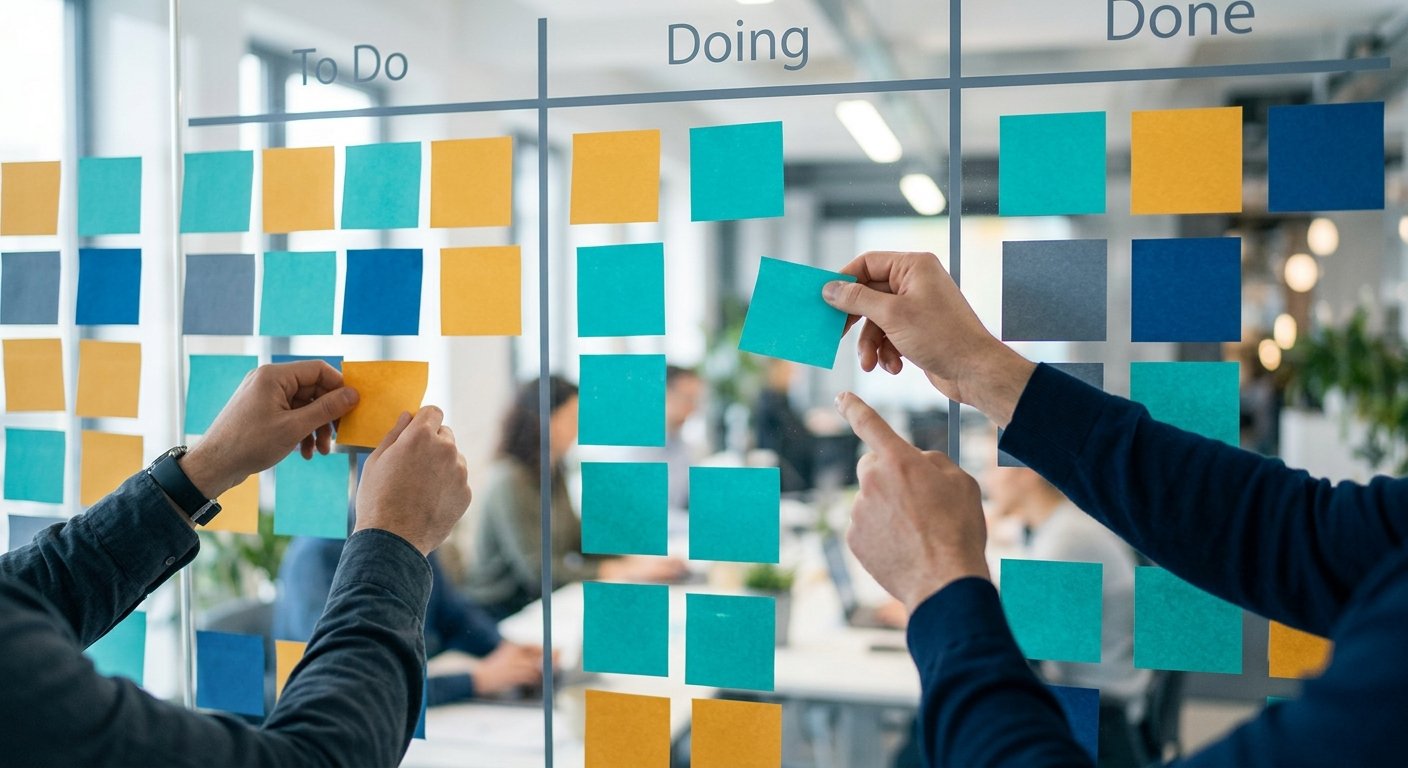
Scrum (roles: Product Owner, Scrum Master, Dev Team; events: Sprint Planning, Daily Standup, Sprint Review, Retrospective; artifacts: Product Backlog, Sprint Backlog, Increment) dominates agile certification paths, but Kanban (visual workflow management) and XP (technical practices like pair programming) also appear in the 2026 PMP exam’s agile-focused questions.
Agile in the 2026 PMP Exam
The Process domain (41% of the exam) contains the highest volume of agile questions, testing hybrid scenario analysis. For example, you might need to choose between a Scrum of Scrums or a phased hybrid approach for a manufacturing IT upgrade. Business Environment (26%) now includes agile metrics like cycle time impact on ROI.
Pure Agile vs Hybrid Selection
Pure agile works best for:
- Projects with evolving requirements (software, marketing campaigns)
- Teams colocated or highly collaborative
Hybrid suits:
- Regulated industries (healthcare, finance) needing phase gates
- Projects with fixed-scope components (construction, hardware)
Common Agile Anti-Patterns
1. ‘Sprint-But-Waterfall’ — doing mini-waterfalls inside sprints. 2. Overloading the Product Owner with analyst duties. 3. Treating standups as status reports. The 2026 exam tests recognition of these in scenario questions.
Metrics That Matter
Velocity (output consistency), sprint burndown (work remaining), and cycle time (start to delivery) appear most frequently. Unlike predictive metrics, agile emphasizes working software over documentation completeness.
Related Reading
PMP Certification 2026 Guide
When to Choose Hybrid Project Management
Scrum vs Kanban: PMP Exam Focus
Key Takeaways
- Scrum, Kanban, and XP are the core agile frameworks tested in the 2026 PMP exam.
- Approximately 60% of PMP questions now use agile/hybrid approaches across all domains.
- Hybrid works best when regulatory or physical constraints exist alongside agile benefits.
Frequently Asked Questions
Q: What is the difference between Scrum and Kanban?
A: Scrum uses fixed-length iterations (sprints) with predefined roles/events, while Kanban visualizes workflow on a board with work-in-progress limits and continuous delivery.
Q: When should I choose hybrid over pure agile?
A: Hybrid works best when regulatory requirements (e.g., FDA approvals) or physical deliverables (e.g., construction phases) demand predictive elements alongside agile flexibility.
Q: How much of the 2026 PMP exam is agile or hybrid?
A: Approximately 60% of questions use agile/hybrid approaches, distributed across all domains (People 33%, Process 41%, Business Environment 26%).
Q: What are common agile anti-patterns?
A: Daily standups becoming status reports, sprints without retrospectives, and product backlogs without clear prioritization are frequent exam scenarios.
Q: Does agile certification require coding skills?
A: Only certain frameworks (e.g., XP’s technical practices) need coding. Most agile certifications focus on workflow and collaboration.