
Scrum Definition: The Complete 2026 Guide for PMP Candidates
Quick Answer: Scrum is an agile framework for managing complex projects, emphasizing iterative progress through fixed-length sprints, defined roles (Product Owner, Scrum Master, Development Team), and ceremonies like daily stand-ups and sprint reviews.
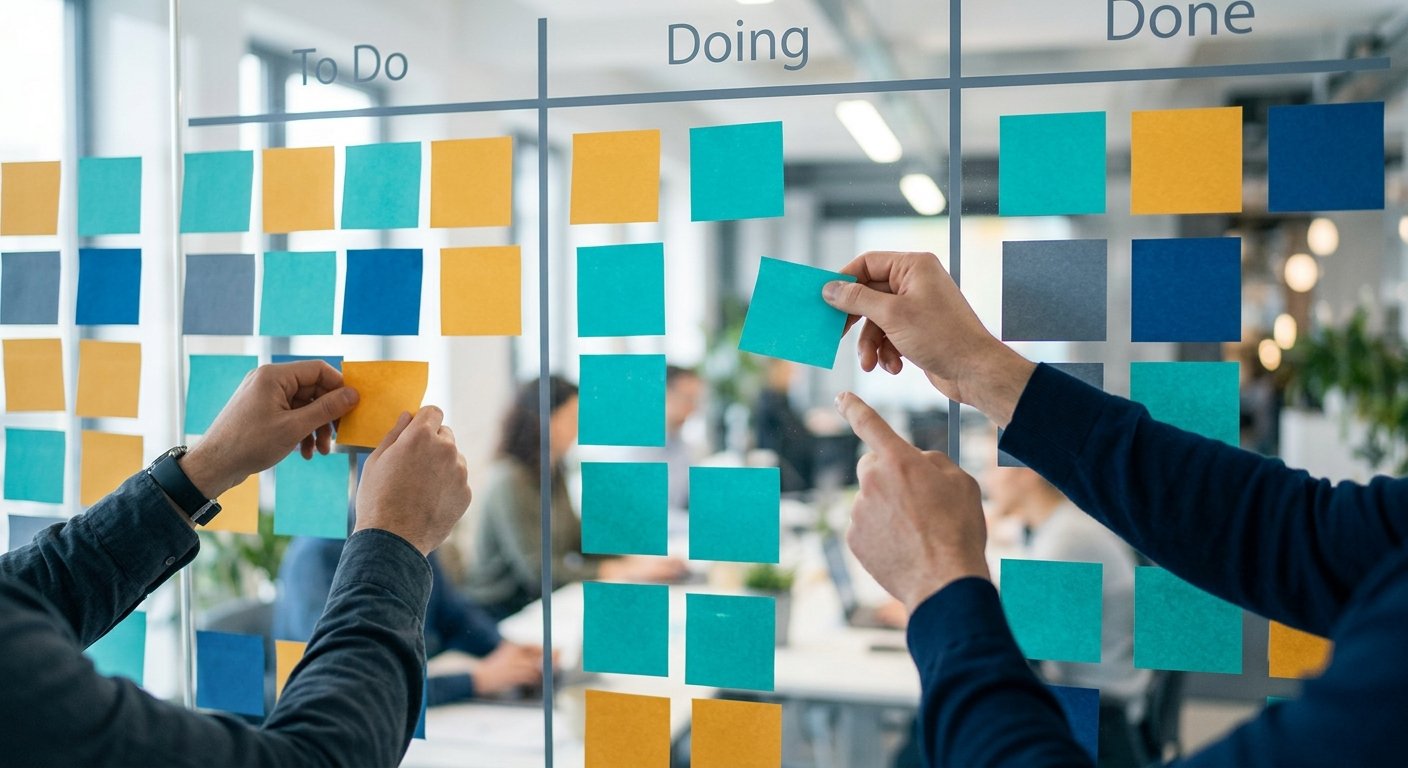
What is Scrum?
Scrum is an agile framework designed to manage complex projects through iterative development cycles called sprints. Per the Agile Practice Guide, it emphasizes adaptability, continuous improvement, and delivering value incrementally.
Core Scrum Framework
The framework consists of three roles, five events, and three artifacts:
- Roles: Product Owner, Scrum Master, Development Team
- Events: Sprint, Sprint Planning, Daily Scrum, Sprint Review, Sprint Retrospective
- Artifacts: Product Backlog, Sprint Backlog, Increment
Scrum in the 2026 PMP Exam
Approximately 60% of the 2026 PMP exam uses agile or hybrid approaches, distributed across all three domains. Scrum scenarios frequently appear in People (33%) and Process (41%) domain questions.
When to Choose Pure Agile vs Hybrid
Pure Scrum suits projects with evolving requirements. Hybrid approaches (e.g., Scrum-Waterfall blends) are better when regulatory compliance or phase-gate approvals are required. A 2026 PMP exam question might test this tradeoff.
Common Anti-Patterns
Scrum Master as project manager, skipping retrospectives, or treating sprints as mini-waterfalls undermine agility. These are frequent exam pitfalls.
Metrics That Matter
Velocity, sprint burndown, and release burnup charts are scrum-specific metrics tested in the 2026 exam’s Business Environment domain (26%).
Related Reading
Agile vs Waterfall: Key Differences
PMP Exam Changes in 2026
Hybrid Project Management Guide
Key Takeaways
- Scrum is an agile framework with defined roles, events, and artifacts central to 60% of the 2026 PMP exam.
- The 2026 exam emphasizes hybrid approaches where Scrum blends with predictive methods.
- Scrum anti-patterns like skipped retrospectives are common exam pitfalls.
Frequently Asked Questions
Q: What is the difference between Scrum and Kanban?
A: Scrum uses fixed-length sprints and prescribed roles/events, while Kanban focuses on continuous flow with work-in-progress limits. Both are agile frameworks tested in the 2026 PMP exam.
Q: When should I choose hybrid over pure agile?
A: Hybrid approaches (e.g., Scrum-Waterfall blends) are preferable when facing regulatory constraints, fixed-price contracts, or legacy phase-gate processes—common scenarios in the 2026 exam’s Business Environment domain.
Q: How much of the 2026 PMP exam is agile or hybrid?
A: Approximately 60% of questions use agile or hybrid approaches, distributed across People (33%), Process (41%), and Business Environment (26%) domains.
Q: What are common Scrum anti-patterns?
A: Treating the Scrum Master as a project manager, skipping retrospectives, or allowing scope creep within sprints are frequent mistakes highlighted in PMP exam scenarios.